How Long Can a Cat Live With Ascites
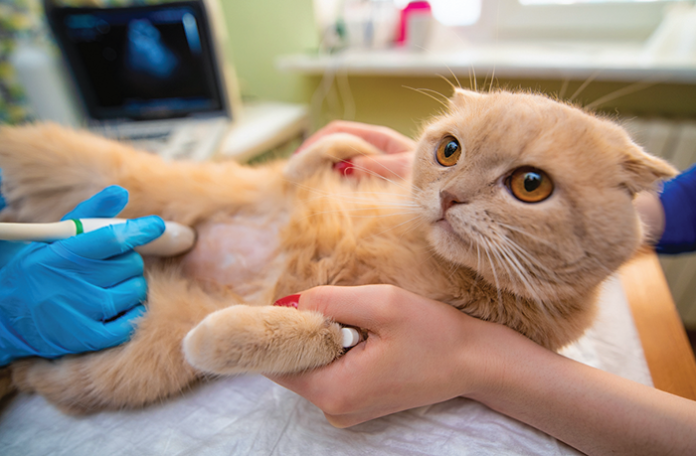
Photography nakleyschikova | iStock Photograph
At start glance, your cat may announced to be getting fat, but and so you realize her abdomen looks swollen and feels squishy. She has not been eating usually, is lethargic, and may have been airsickness. Chances are, that big abdomen is fluid buildup.
"Ascites" is the technical term for fluid accumulation in the belly. The fluid may be due to an injury, organ malfunction, or a systemic disease. Usually, the onset of ascites is gradual, making it difficult for most cat owners to find at first.
Diagnosis
Your veterinarian will exercise a thorough physical examination and may recommend an abdominal ultrasound to run into the extent of the fluid buildup. Radiographs can identify ascites, but they are a much less sensitive examination for this condition. In improver, a complete blood count, chemical science panel, and urinalysis may exist recommended to try to determine the cause of the fluid buildup.
Fluid samples volition be sent to a pathology laboratory for microscopic evaluation, which will requite your veterinarian data about the cellular components of the fluid.
A classification of "transudate" indicates a low-poly peptide fluid and suggests liver, kidney, vascular problems, or possibly an intestinal disease. A "modified transudate" by and large ways the fluid has evidence of inflammation. Modified transudates have increased protein and cells, including, in some instances, hepatic lymph cells or cancer cells. FIP and lymphocytic plasmacytic cholangiohepatitis (inflammatory liver disease) tend to crusade modified transudate fluid.
Still, notes Sharon A. Center, BS, DVM, DACVIM, Professor of Medicine in the Department of Clinical Sciences, College of Veterinary Medicine at Cornell University, correct-sided middle failure, chronic hepatitis, and diverse cancers can all atomic number 82 to ascitic fluid that is normally a pure transudate or modified transudate with low albumin concentration.
Treatment
The chief causes of fluid buildup in the abdomen include:
- Cancer
- Feline infectious peritonitis (FIP)
- Kidney disease
- Liver disease
- Pancreatitis
- Physical trauma
- Right-sided heart failure
- Ruptured blood vessel
- Ruptured urinary bladder
- Splenic trauma
Whatever crusade of correct-sided center failure, such every bit some congenital malformations in kittens, may cause ascites. Heart problems are ofttimes picked upwardly by veterinarians during routine physical examinations. Further testing may include an electrocardiogram (EKG) and an echocardiogram.
Many cancers will shed cells into the ascitic fluid, leading to a conclusive diagnosis if neoplastic cells are constitute and identified by a veterinary clinical pathologist. Abdominal cancers in cats include lymphomas, hemangiosarcomas, and a range of sarcomas and carcinomas.
While the fluid can exist removed using a fine needle that is passed through the abdominal wall (abdominocentesis), this is usually not a cure and care must exist exercised to maintain fluid residual and protein levels in apportionment. Medications such equally diuretics may be used to induce urination to decrease the degree of ascites in some patients.
The cause of the fluid buildup must be addressed to forbid it from recurring. For ascites secondary to trauma, surgery may be necessary.
Unfortunately, ascites is ofttimes not a good prognostic sign for your cat, only your best bet is to get your cat to your veterinarian immediately if you notice what appears to be fluid buildup in the abdomen of your true cat.
Source: https://www.catwatchnewsletter.com/health/ascites-is-a-serious-symptom/
0 Response to "How Long Can a Cat Live With Ascites"
Post a Comment